National symbols of Finland
National symbols express how a country understands itself. In Finland, these symbols reflect history, nature, independence, and shared civic values. They appear in everyday life, public institutions, education, and official ceremonies, and are widely recognised by the population.
The Finnish flag
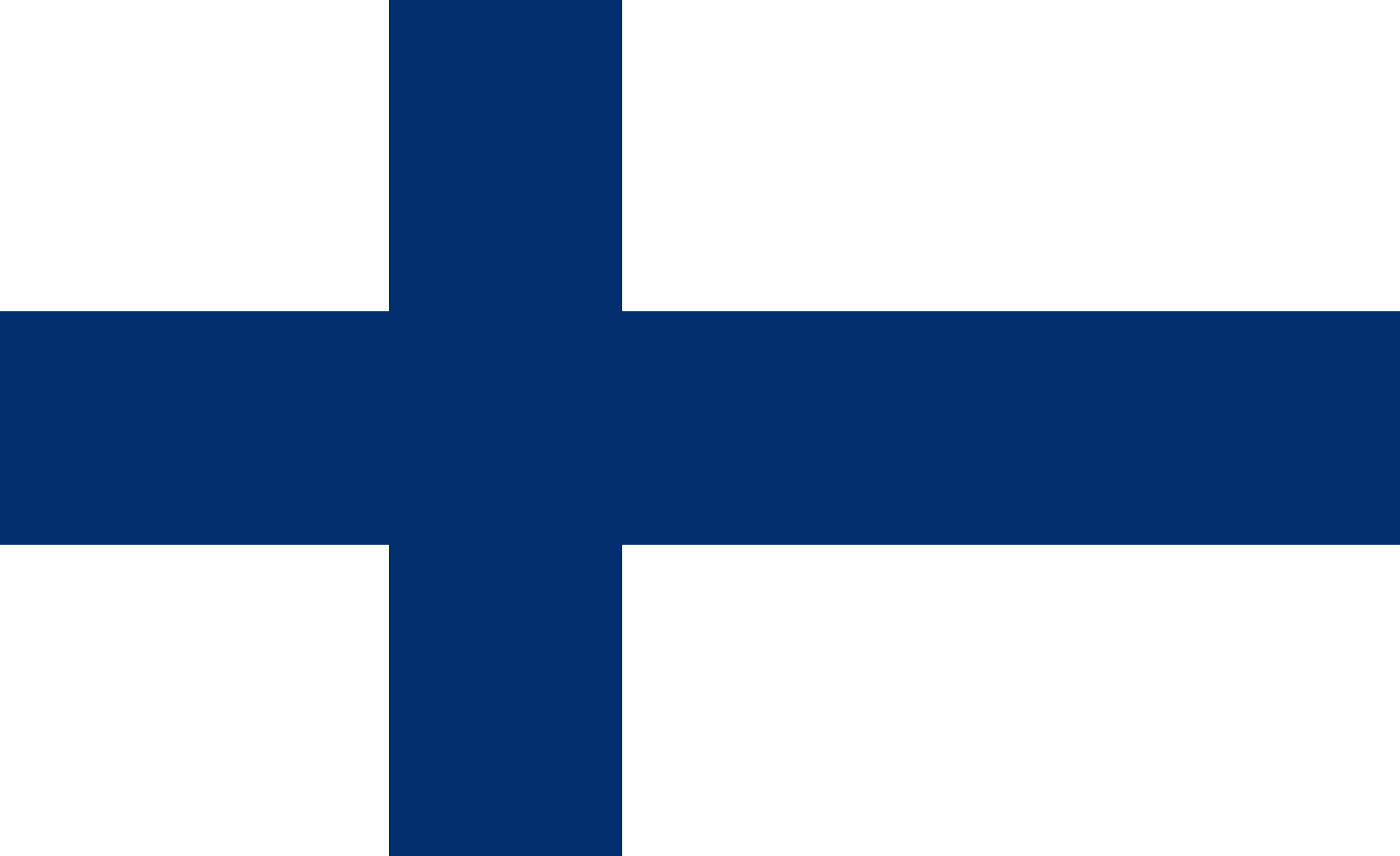
The Finnish flag is white with a blue Nordic cross. The design places Finland within the Nordic tradition, linking it symbolically to other Nordic countries. The blue cross is commonly associated with Finland’s lakes and sky, while the white background evokes snow and northern light.
The flag is a legally protected state symbol. Its use is regulated by law, and it is flown on official flag days, national holidays, and important public occasions. Many private citizens also raise the flag for personal celebrations such as birthdays.
The coat of arms
Finland’s coat of arms features a crowned lion holding a sword, standing on a curved sabre. The symbol dates back to the 16th century and has been used in various forms throughout Finland’s history.
Today, the coat of arms represents state authority and continuity. It appears on official documents, passports, coins, court buildings, and other symbols of public power. Its long historical use emphasises the permanence of the state.
The national anthem
Finland’s national anthem is “Maamme” in Finnish and “Vårt land” in Swedish. The song has equal status in both languages, reflecting Finland’s bilingual character.
The anthem is performed at official events, national celebrations, and sporting occasions. While it carries emotional significance, singing the anthem is not legally required, reflecting Finland’s restrained approach to national symbolism.
Other nationally recognised symbols
In addition to official state symbols, Finland recognises several national nature symbols that are widely known and taught in schools. These symbols highlight the close relationship between Finnish identity and the natural environment.
The national bird is the whooper swan, often associated with wilderness, freedom, and northern landscapes. The national animal is the brown bear, traditionally seen as a symbol of strength and resilience. The national flower is the lily of the valley, valued for its simplicity and seasonal beauty.
The role of symbols in Finnish society
National symbols serve as shared reference points. They are used in education to teach history and civics, and in public life to mark important collective moments.
In Finland, symbols are generally treated with respect but without excessive ceremony. This reflects a broader cultural preference for moderation, equality, and civic rather than emotional expressions of national identity.